


A sense of nervous excitement. Visible is the frosty air emanating from my fellow runners as they do the "about to run" wiggle on the start line.
A quick twitch of the hips.
I'm at my local 5km community parkrun and I'm serious. The countdown begins...
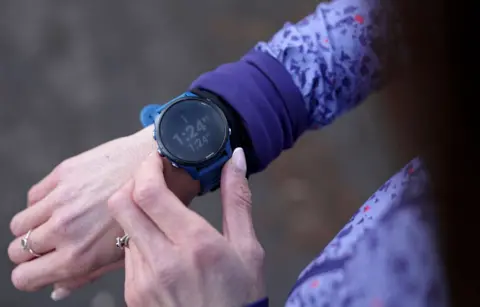
Wait a second. I need to start my watch. As does the guy beside me.
The person behind us tuts. I won't start until… there! Signal acquired, I'm off.
During the scramble, it's hard to spot a wrist without a wearable on it. And this isn't only us athletes who wear them.
We're witnessing a thriving, massive market. Brands like Garmin lead the market, featuring an broad selection of different devices to cater to a spectrum of budgets. Based on how advanced the model you choose, price tags can range from a hundred pounds to a significant investment.
"It drives me insane, it's impossible to switch off."
"It comforts me… It feels like a friend supporting me."
"I wish it wouldn't say about a poor sleep."
A handful of the reactions people have shared from like-minded device users when I ask what they their opinion is on theirs.
The Data Dilemma
My thoughts on my own device? Right now, frustrating. It's reporting I'm off pace, causing me to question whether the foliage I'm running below are disrupting my satellite signal.
A vast number of us strap these little devices onto our wrists and wear them constantly, seemingly comfortable with the fact they're perpetually tracking us.
Gone are the days when we depended on them exclusively to give us an rough count of our daily steps. Today, they can measure our sleep patterns, blood pressure, oxygen saturation, our body battery.
It's a challenge to find a bodily function they aren't designed to measure.
But are they able to do what they claim to do? And are the data points we scrutinise a true reflection of reality? Do they improve our mental and physical wellbeing, or do the multitude of measurements and cheerleading alerts just increase our daily stresses?

A Complicated Bond
"I find myself getting a quite preoccupied with mine," a wearer admits.
While she appreciates how her device records her exercise, she finds some of its other features "overwhelming" at times - a feeling initially realised during a major life event.
Before she realised she could change its configuration, her smartwatch constantly alerted her she was not being productive enough. In a new phase, the watch keeps telling her she's had a restless night.
"I have a six-month old, there's no point to be told my sleep was poor," she says. "I'm acutely aware only too well."
Is it not possible to just take it off?
"I suppose I could, perhaps, but I'm in this love-hate relationship with it," she says. "I appreciate it for its workout tracking, I just wonder whether the additional features it can now do is perhaps too much for me."
How Do They Work?
Different brands of smartwatch has its own novel way of tracking your bodily functions and processing your data, but the majority use sensors on the underside of the watch.
They usually shine tiny, coloured LED lights onto your arm which can detect blood flow, detecting your pulse rate. Sophisticated devices measure changes in the electrical current that flows through the skin to get an idea of your stress levels.
A Fine Balance
A data scientist says that overall for smartwatches, it's a "difficult line" - while the continuously improving tech could potentially aid early diagnosis, "spotting abnormalities before we notice anything", it could also turn us watch wearers into the "anxious healthy".
He points out that the most advanced wearables can conduct tests like electrocardiograms (ECGs), which regularly monitor how normal the heart is. They can notify if someone is experiencing a heart arrhythmia, where there is abnormal signals in the heart causing an arrhythmia.
This does not mean someone is on the verge of a cardiac event, but it can give an preliminary indication they might be more at risk of a heart problem in the future.
But how to interpret these figures is complicated. The expert fears that as additional features are incorporated, people may not be able to fully contextualise their data.
"I remain sceptical that having the capacity to monitor so many metrics is such a beneficial thing," he says.
A professor studying cardiology concurs. Research into the influence of wearable tech on a set of individuals with health issues suggested a significant portion of those who were given devices to monitor their cardiac function experienced heightened worry and were "far more likely to use doctor's time".
She identified a vicious circle with her patients - they noticed a concerning reading on their watch. They became worried. Their BPM increased. They got even more concerned. They checked again, and their reading rose further.
"If we see data about ourselves that we don't really understand then, understandably, we are going to become concerned," the psychologist says. "We check, we obsess - it becomes a feedback loop."


